
We develop new methods that learn from satellite imagery, ground-level photos, sound, and text, and we build them into collaborations on agriculture, ecology, forests, air quality, natural hazards, and public health.


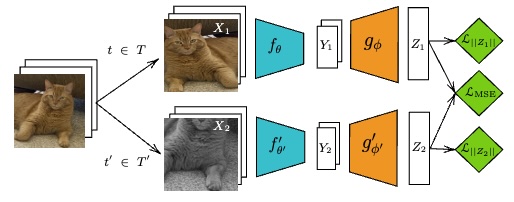
Self-supervised and multimodal embeddings that align vision, language, and audio for robust learning across sensors and domains.
Explore →
Planet-scale geospatial ML: unified embeddings, cross-view localization, and structured reasoning over satellite, aerial, and ground imagery.
Explore →
Generative models for images, 3D scenes, and multimodal earth data across scales and sensors.
Explore →
Models that retrieve, describe, and reason over images with language, for Earth observation and the natural world.
Explore →Much of our most consequential work happens within larger collaborative efforts, where we contribute AI methods and models.
Shared embeddings across species photos, sound, satellite imagery, and taxonomy, including TaxaBind and related work.
Fields of The World, the first global 10 m field boundary map, and early signals of crop instability.
Global fine particulate matter estimation that combines deep learning with geophysical models.
Landslide mapping from lidar and terrain analysis.
The built environment and health, with a focus on spatial equity.


We are a computer vision and machine learning lab in the McKelvey School of Engineering at Washington University in St. Louis, led by Nathan Jacobs. Our research spans multimodal representation learning, geospatial foundation models, and generative modeling. We publish at CVPR, ICCV, ECCV, NeurIPS, and WACV, and we release code, models, and datasets. We welcome postdocs, students, research staff, and visitors—see our openings and FAQ page to learn more about joining the lab.


